Screenwashed Proposal
Every generation has a hole in its heart. This book explains who put it there.

A Nonfiction Book Proposal By
JOSHUA H TYLER
The entertainment you watch has never been less interested in giving you what you want. It has other plans.
The most effective way to influence someone isn’t by giving them orders. It’s by making them feel like each step forward is their idea, until they arrive exactly where you wanted them to be. They think they’re choosing freely, while someone else is quietly arranging the choices.
Advertisers already understand this. James Bond never stops the movie, stares into the camera, and orders everyone to buy an Aston Martin. He simply makes driving one look desirable. The audience supplies the next thought: I want that. Advertisers spend enormous amounts of money placing products in movies because they know a sales pitch is more powerful when it feels like your own idea.
Screenwashed asks what happens when those same techniques are applied to beliefs about family, success, education, authority, and morality.
Most film and television commentary judges entertainment by how well it tells a story. But a beautifully told story can still lead you somewhere you never agreed to go. It's like filling Pepsi cans with lemonade and then excusing the deception by telling consumers it's really good lemonade. It's the dishonesty that's the problem, not the quality of the liquid in the can.
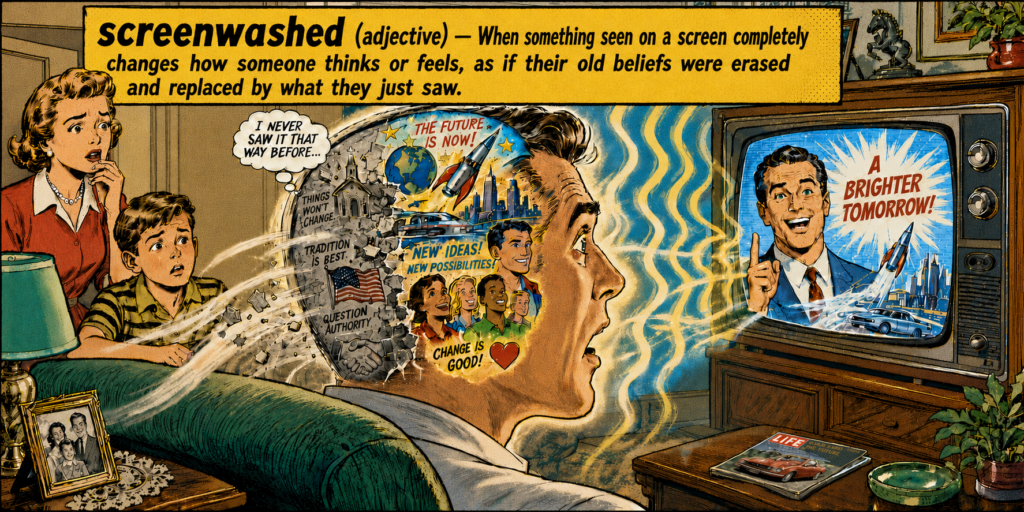
Screenwashed uses movies and popular culture to give readers the tools they need to spot the persuasion techniques being used against them. Through familiar stories, an original vocabulary, and full-color comic-book-style illustrations, it teaches readers to recognize where entertainment is leading them before accepting its conclusions as their own.
Each chapter introduces an influence pattern, explains how it works, and demonstrates it through movies, television, and real-world examples. Mary Poppins becomes a lesson in Emotional Reframing, showing how a trusted family movie makes responsibility feel irresponsible. Pleasantville provides a visually literal demonstration of Affective Conditioning, attaching moral judgments to color and black-and-white imagery. The Day the Earth Stood Still introduces Virtue Tolls and connects the pressure to demonstrate goodness with the charitable demands readers encounter at a checkout.
Screenwashed also supplies a solution to dishonest manipulation: Reasoncraft, persuasion through openly stated reasons and honest exploration rather than manipulation. Using Star Trek as a classroom, Screenwashed shows how fiction can present competing arguments and invite audiences to reason through them.
Bestselling books like Influence have explained the principles of persuasion. Cultish examined the language that shapes beliefs. Screenwashed is the first book to bring entertainment analysis, persuasion terminology, and an explicit argument about the ethics of hidden influence together in one easy-to-understand framework.
Joshua H Tyler’s approach draws on more than twenty-five years spent analyzing entertainment and building audiences as the founder of CinemaBlend and Giant Freakin Robot, alongside formal training as a certified consulting hypnotist.
Screenwashed is written for readers who want to better understand how entertainment influences beliefs, behavior, and culture. While the book uses movies and television as its primary teaching tools, its subject is persuasion itself. As a result, its audience extends well beyond film enthusiasts into readers interested in psychology, communication, media literacy, parenting, education, advertising, and self-improvement.
Strong evidence for this audience already exists. While testing the ideas behind this book, I grew the Screenwashed YouTube channel from zero to 35,000 subscribers in less than four months. The channel functioned as a real-world laboratory, allowing me to measure not only which concepts attracted viewers, but which ideas generated the strongest engagement, discussion, repeat viewing, and requests for additional content.
The Screenwashed audience demonstrates an unusually high level of engagement and loyalty. Across the channel, viewers are not passive consumers but active participants who regularly discuss, debate, and share the ideas presented. This suggests an audience invested in the underlying concepts rather than simply individual videos.
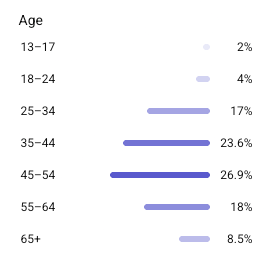
Screenwashed’s audience is heavily concentrated among mature adult viewers who seek long-form analysis: 68.5% are ages 35–64, including 26.9% ages 45–54 and 23.6% ages 35–44.
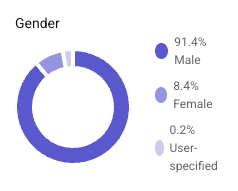
Current YouTube analytics show that 91% of Screenwashed viewers are male. While the channel has found particularly strong resonance with men, the book’s broader focus on parenting, media literacy, education, and critical thinking provides opportunities to expand beyond the existing audience.
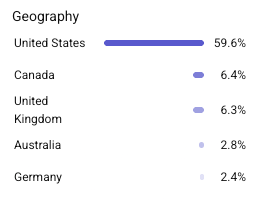
Viewers for the YouTube channel are concentrated in English-speaking markets, with 60% in the United States alone.
Audience metrics demonstrate interest. Viewer comments demonstrate demand. The following real responses taken from our YouTube channel are representative of the enthusiasm Screenwashed has consistently generated.
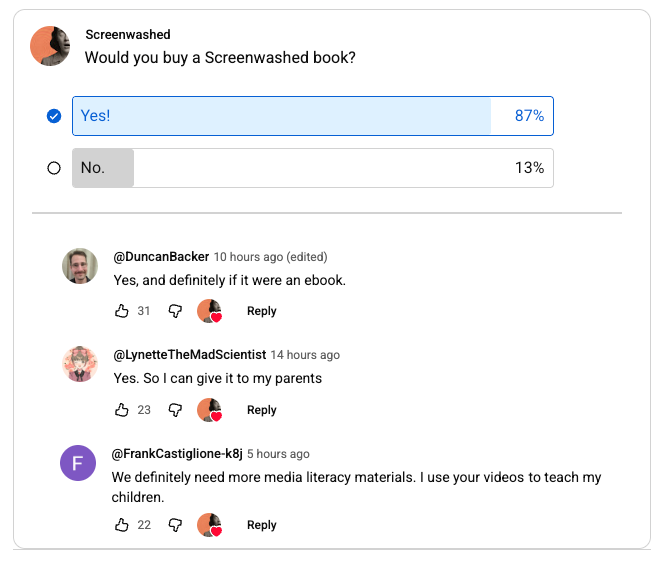









The audience already demonstrated by Screenwashed is only the beginning. While the channel attracts movie fans, the book’s real subject is influence. Because its framework applies equally to entertainment, advertising, education, politics, and everyday communication, Screenwashed has the potential to reach a much broader audience than the YouTube channel alone.
Screenwashed has a clear path to success, thanks to the trail blazed by the following books. They prove there’s a market for accessible nonfiction that helps readers better understand themselves and the world around them. Each explores part of the territory Screenwashed covers. None combines entertainment, persuasion, original terminology, and visual teaching tools into the practical framework Screenwashed provides.
Influence: The Psychology of Persuasion
Robert Cialdini (1984)
Robert Cialdini has been called the Godzilla of persuasion, and Influence is widely regarded as one of the foundational books on the subject. Having sold more than five million copies worldwide, it established an enduring market for accessible books about how persuasion works. Where Cialdini explains influence through research and real-world examples, Screenwashed uses entertainment as its classroom. By teaching persuasion through stories readers already know, it transforms abstract psychological principles into practical tools that are immediately recognizable.
Think Again: The Power of Knowing What You Don’t Know
Adam Grant (2021)
In 2021, Adam Grant’s self-help hit Think Again hit number 1 on the New York Times bestseller list by giving people a framework to rethink their beliefs and examine how they came to them. Since then, Grant has sold millions of copies and been translated into 45 languages. He connected with readers by combining research and observation with stories from business, sports, education, and public life. Screenwashed takes a similar approach to teaching readers how to rethink their assumptions by helping them notice the outside influences that shaped them in entertainment.
Cultish
Amanda Montell (2021)
In her New York Times bestseller Cultish, Amanda Montell reveals the hidden influence affecting us all and teaches her readers to recognize linguistic patterns that shape our beliefs and attitudes. Screenwashed takes this approach directly to the more accessible world of entertainment, gives readers a vocabulary for identifying its influence, and empowers people to see patterns they’ve never noticed before.
You Are What You Watch
Walt Hickey (2023)
Pulitzer Prize-winning author Walt Hickey takes a data-driven approach to demonstrate that people are influenced by their screens in You Are What You Watch. Critics praised Hickey’s book, and Screenwashed takes the next step by identifying the mechanisms entertainment uses to persuade viewers and shape their thinking, doing so with an accessible approach.
Joshua H Tyler is a certified consulting hypnotist, writer, film critic, entrepreneur, and internet pioneer; one of the earliest independent publishers to find sustained success online. His first published work appeared on the internet in 1997 and has long since vanished into the ancient mists of the early web.
In 2000, Josh founded an independent entertainment news website. Though it began under a different and far sillier name, that site would eventually become CinemaBlend.
CinemaBlend grew to employ more than thirty writers and editors, covering breaking news, film festivals, movies, and television around the world. In 2007, Time Magazine recognized Josh among the internet’s influential and critically clever film journalists. By the time Josh sold and exited the company in 2015, CinemaBlend had become the web’s most-read entertainment publication and ranked among the 4,000 most-visited websites worldwide.
After the sale, Josh took a break from running media companies to study hypnotism. He spent a year training under an elderly martial artist who once fought Bruce Lee, hypnotized dozens of subjects on his way to certification, and became a consulting hypnotist.
Josh later returned to run Giant Freakin Robot, a news and opinion site he founded in 2008. Despite its silly name, Giant Freakin Robot also rose to rank among the 4,000 most-visited websites worldwide.
In addition to running Giant Freakin Robot, Josh writes, produces, edits, and narrates videos for the popular Giant Freakin Robot and Screenwashed YouTube channels. He also serves as board chair of Red Barn Chess, an awarded community nonprofit where he volunteers his time and resources to help children develop critical-thinking skills.
Josh’s unique experiences involving decades spent studying entertainment, building online audiences, and examining persuasion led directly to the creation of Screenwashed.
Joshua H Tyler has spent more than twenty-five years building audiences around entertainment and promoting content to them. His successes include:
Joshua will be able to support promotion of Screenwashed through the following channels.
Projected Word Count: Approximately 55,000 words.
Current Manuscript: Approximately 45,000 words completed and available upon request.
Illustrations: Original, full-color comicbook-style illustrations appear throughout the book as a teaching tool to explain key concepts and persuasion techniques in a way anyone can understand.
Estimated Format: Trade paperback and ebook, approximately 300-350 pages.
Screenwashed is organized as a progressive framework. Each chapter introduces a new influence pattern, explains how it works, and demonstrates it through familiar movies, television shows, and real-world examples.
Preface
Entertainment as empty calories is a facade. In this chapter, Screenwashed lays the groundwork to teach the reader about the way the content they consume influences their beliefs, opinions, and patterns of thought. It begins with a personal story about a martial arts hypnotist, and uses that to teach readers that anyone can be influenced. Even them. It promises Screenwashed will give anyone who reads it the ability to see the hidden world of persuasion operating beneath the entertainment they consume and the culture surrounding it.
Chapter 1: You Can’t Fight The Future, But You Can Get People To Stop Planning For It
The worst thing that ever happened to families was the most popular family movie of all time. Screenwashed explains how Mary Poppins uses Emotional Reframing to teach children that adults who plan are villains, that mothers don’t need to be present, and that money is something you feel about, not something you manage. It wraps that lesson in warmth, then dares you to question it without looking like the bad guy yourself.
Chapter 2: Normalizing Naked Sensationalism
Joshua explains how having cheeseburgers thrown at his Tesla proves he’s a curmudgeon and also that Americans were influenced by a movie called Network. Screenwashed demonstrates how both Network and the George Clooney movie Good Night, And Good Luck used a persuasion technique called Affective Conditioning to lead audiences into two very different conclusions about the way we get facts.
Chapter 3: The Belonging Drug
People don’t just want to belong; they need to. Rejection isn’t treated by the brain as a metaphorical pain; it registers the same way as physical harm. That means people will do almost anything to make sure they belong. Joshua relates how this human need impacted him personally, then uses visual explanations to show how One Battle After Another hijacks our need for acceptance, persuading people to trap themselves inside a mental prison.
Chapter 4: Paying The Virtue Toll
Screenwashed beams into the world of classic sci-fi to uncover the surprising effect The Day the Earth Stood Still had on your Taco Bell drive-thru experience. Those incessant requests for charitable giving at the checkout are something called Virtue Tolls, and this chapter explains how one of cinema’s most influential science-fiction films helped normalize them, while revealing a better way to do good in the world.
Chapter 5: The Failure Cult
Humans don’t make decisions based on logic. Our feelings point the way. Screenwashed explores how The Graduate used those feelings to convince its audience that success is failure and failure is success. Freedom becomes a prison when boredom is the ultimate evil.
Chapter 6: The Debt Party
With Joshua’s daughter struggling to find a career, he takes readers into the world of higher education that started when the Vietnam War ended. Screenwashed cannonballs into the world of college raunch comedies to expose how men were tricked into living a life of debt slavery, just to get a shot at banging some girl from a sorority.
Chapter 7: The Sin Of Usefulness
That previous chapter may have you questioning the value of college. Fear not, A Man On The Inside is here to persuade you into believing that education is supposed to be dumb! Screenwashed reveals how A Man on the Inside reframes skepticism about higher education as a moral failing, teaching audiences that questioning college means rejecting family, community, and compassion itself. And in the end it proves that the only sin worse than uselessness is usefulness itself.
Chapter 8: The Wife Smear
In between the election of Richard Nixon and the massive increase in women trading in their lives as housewives for an office cubicle, was a failed science fiction movie. A science fiction movie that did what all the bra-burning flower power of the 1960s could not, though no one watched it. Screenwashed discovers how The Stepford Wives turned families on their heads and persuaded women to go to work.
Chapter 9: All Killers Go To Heaven
Screenwashed enters the world of the Manson Family and discovers that modern day Christians would have forgiven them. Culture changed because a movie called Star Wars figured out how to modify beliefs using a persuasion technique Joshua calls Heartwashing.
Chapter 10: Pavlov’s Movie
Not every movie that attempts to covertly persuade its audience succeeds right away. Sometimes, the agenda being pushed is so outlandish and ridiculous that it needs more time to take hold. Screenwashed looks into Pleasantville’s attack on Americans’ rosy view of the past with a clumsy, Pavlovian sledgehammer and discovers a color-coded call to hedonism instead.
Chapter 11: The Power Of Pink
Wondering why the world is turning gray? Joshua relates his hypnosis cure for a headache and uses that to explain the way people can be influenced by colors. It’s called Chromatic Conditioning and it’s a technicolor trick being used like a sledgehammer on modern audiences.
Chapter 12: The Second Season Switch
Sick of all your favorite streaming shows turning terrible in the second season? It’s not an accident. Screenwashed finds weapons-grade persuasion techniques secreted inside your favorite streaming programs and then shows you how to use them to persuade a jury of your peers.
Chapter 13: The Man Trap
Joshua explains the cultural movement that destroyed his first company, then warns audiences against being fooled by Michael Douglas dressed up as an angry nerd in 1993’s Falling Down. Screenwashed explores how an identification reversal was used to turn helpful advice into a powerful propaganda weapon.
Chapter 14: Building Your Mental Prison
Screenwashed is like a box of chocolates. You never know what you’re gonna get. In this chapter Joshua relates his daughter’s attempt to convince her classmates to stop believing in birds. Along the way, you’ll discover the technique Forrest Gump uses to trigger its audience into a hypnotic trance. There’s nothing innocent about Forrest Gump. Especially not the ping pong.
Chapter 15: The Infinite Grief Machine
Every Gen Xer has a hole in their heart, and only Screenwashed knows what put it there. Learn how cynical toy executives created an army of endless slop eaters by killing off Optimus Prime and replacing him with an inferior character.
Chapter 16: The Nerd Trap
Steve Urkel once asked: “Did I do that?” He didn’t, but Andy Stitzer did. Screenwashed pinpoints the place where nerds stopped being pantsed and started getting taken seriously. And they have the persuasive power of one movie to thank for it.
Chapter 17: The Infinite Guilt Machine
Hollywood’s history of selling out its ideals for investment capital is revealed. Then Joshua gets lost in the jungle and narrowly avoids being eaten by cannibals on the way to discovering the persuasion tricks that turned Native Americans into heroes and American settlers into villains.
Chapter 18: The Chaos Carnival
Would modern protests be violent if Joker hadn’t persuaded audiences that chaos is beautiful. Can one movie really create that much chaos? Screenwashed finds the answer.
Chapter 19: Gatekeeping Because
The heartbreaking real-life story of a man pushed past the edge takes Screenwashed into darkness as we explore how X-Men ended exclusivity and replaced it with a world bereft of standards. All it took was a fake because.
Chapter 20: The IQ Delusion
Screenwashed creates a much needed term for people without pattern recognition skills and discovers how movies like Gattaca and Zootopia use Evidence Judo to persuade people toward believing that everyone is as smart as Nikola Tesla.
Chapter 21: The Abuse Excuse
Joshua uses the abuse he suffered as a child to warn modern viewers about the dangerous persuasion tactics of the HBO series Lanterns. Screenwashed teaches readers to immunize themselves against reward framing which sends the wrong message and narrative normalization which could endanger kids.
Chapter 22: Trojan Horse Messaging
In a world gone mad, we could all use a little simple, silly, innocent fun. But you’re not going to get it as long as entertainment can’t be trusted. Do filmmakers have the right to use screens to surreptitiously change or manipulate minds in ways their viewers would not consciously approve of?
Chapter 23: Lemonade Lies
Joshua explains how his son tricked an entire chess club, then grapples with the questions raised by this book. Screenwashed lands on Reasoncraft as the antidote to the power of propaganda, and tells readers where to find it.
The following selections demonstrate Screenwashed's analytical framework through its preface and two representative chapters: Chapter 14, Building Your Mental Prison, and Chapter 21, The Abuse Excuse.
All men must be free to think any thought.
Those were the first words spoken by my teacher, a frail 85-year-old master hypnotist who’d once fought Bruce Lee in single combat and would, later that weekend, be attending the 86th birthday party of former Alfred Hitchcock muse Tippi Hedren.
I’d become convinced to take the wizened black belt’s class after meeting his wife, an attractive 35-year-old who’d married him when she was 29 and seemed to have no regrets about their fifty-year age difference. Clearly, this was a person with skills worth absorbing.
In his course we learned to practice hypnosis, a process I was deeply skeptical about going in. Despite hypnotizing my classmates many times over our months of practice and study, those fellow students repeatedly failed to hypnotize me. After weeks of frustration, they looked to our instructor to put me in a trance.
Instead, our martial arts mesmerizer in chief sat down nearby, leaned back in his chair, and spoke softly. Unable to hear, I leaned in closer.
“When you speak softly, the other person has to lean forward, focus, and work to hear you,” he said.
“That physical movement is a small commitment, and that commitment makes them more open to what you’re about to tell them.”
Embarrassed at being taken in, I sat up ramrod straight, a too-late act of defiance.
“Not everyone can be hypnotized,” he laughed hoarsely. “But everyone can be influenced.”
Everyone can be influenced.
With modern technology as a delivery system, mankind is now being influenced en masse, and all in the same, specific direction. This results in a culture where everyone thinks the same thoughts. That’s a disaster unlike any other faced in human history.
A society built on people thinking the same thoughts in the same way isn’t a thriving one. Progress comes from individuals innovating with unique opinions and ideas. If mankind is going to survive, those individuals will have to start thinking for themselves again, and so I’ve designed Screenwashed to make that happen.
Everyone is influenced by everything around them all the time. Your brain is a moist computer being programmed by the data it takes in. How your brain reacts to those inputs depends on how well you understand them.
Magic tricks only work as long as you don’t know how they’re done. Once you see the trap door hidden inside the magician’s box, the trick loses its power.
Screenwashed will show you the trapdoors hidden in the content you consume on screens by teaching you to think beyond the narrative. Once you’ve seen those hidden doors, you’ll be freed from the shackles of assigned opinions, free to think for yourself in ways you’ve never been able to before.
All men must be free to think any thought. By the time you finish this book, you will.

While in recent years things have become so topsy-turvy that even the most outlandish conspiracy theories have gained credibility, a few of the wildest exist largely for the fun of engaging with something ridiculous.
My favorite of these began as a wrongheaded attempt to mock credible conspiracy theories that eventually came true. An activist wrote “Birds Aren’t Real” on a sign at a Women’s March in 2017, in an attempt to make fun of conservatives who believed the government surveils its citizens.
Over time, other people ran with the idea and turned it into a full-blown conspiracy theory, which I doubt anyone actually believes, but a lot of people have fun pretending that birds sit on power lines to charge their batteries. They’ve gone so far as to draw diagrams, explaining how it all works.
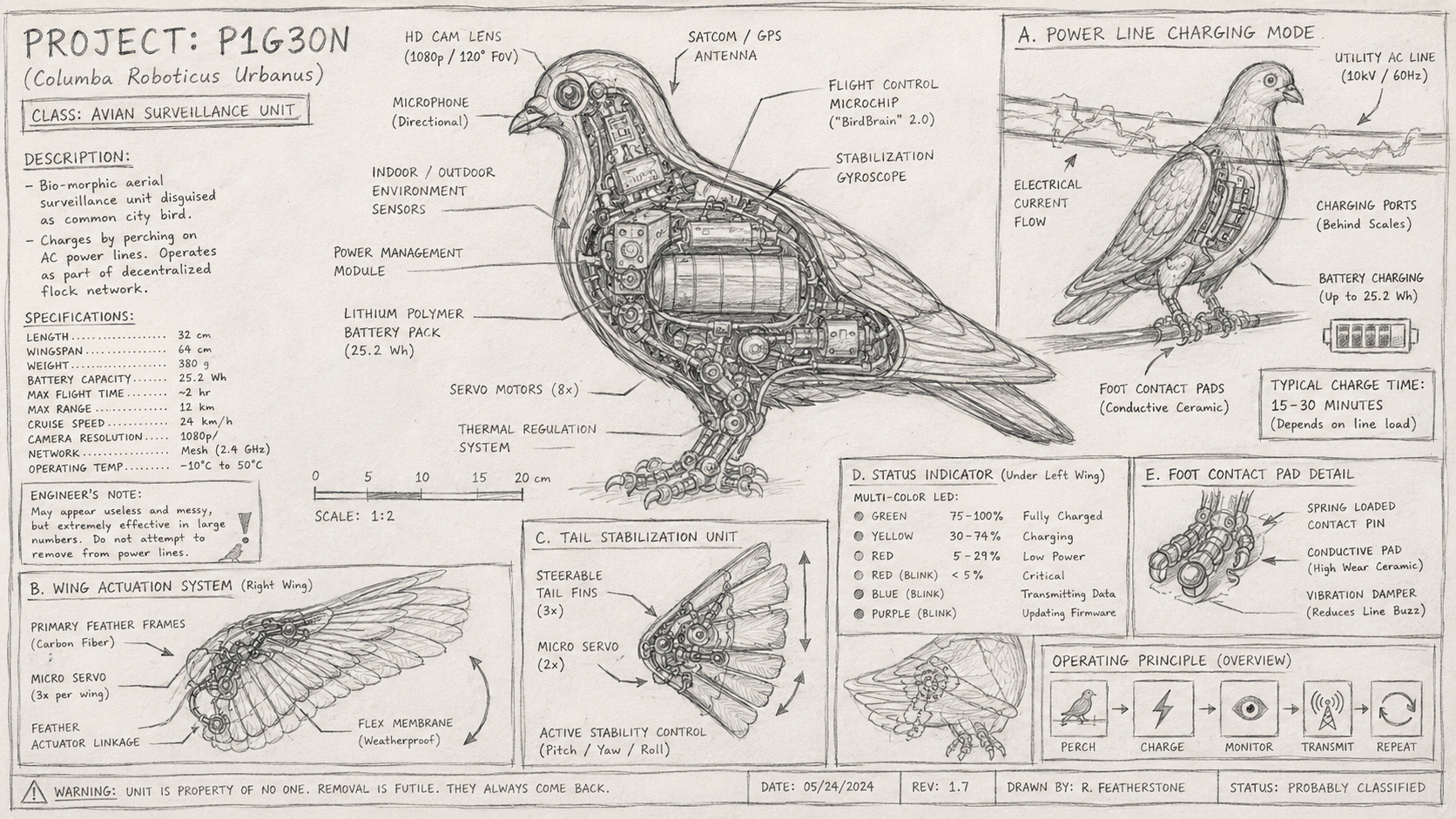
“Birds Aren’t Real” has become something of a family motto around my household, a shorthand way of reminding each other that we can think any thought, no matter how silly or controversial.
As Naomi, my second oldest entered her last year of Middle School, a few weeks into the semester, my wife and I filed into a classroom with her, for our first parent-teacher conference of the season. Her science teacher was full of praise for our daughter, whom he viewed as a perfect student. In fact, he thanked us for what a help she was to him in class.
He confessed that he was especially thankful to have Naomi as a student this year, because he hadn’t been so lucky with the other students assigned to him. Apparently some of them had begun subscribing to some sort of bizarre conspiracy involving the idea that birds aren’t real, and they kept wasting classroom time trying to convince him this was true.
The students' insistence on this had become such a problem and a distraction that he’d been forced into assigning detention for anyone who brought it up. Luckily, our daughter was one of the only students who hadn’t engaged in this ridiculousness, and oh my, he wished he could figure out where those other kids got such an idiotic idea.
Naomi said nothing, but I noted her normally pallid face turning a bright shade of red. That night, we took her out for ice cream after dinner.
Being mentally flexible is something my family works hard at, because it doesn’t come naturally. Human society is structured for maximum conformity, and thinking too far outside the box is a sure route to ostracism or worse.
However, our tendency to view the past has made many begin to re-examine the 1990s as humanity’s golden age. A place of maximum intellectual freedom. A time when when internet was rising in its earliest (and purest) form. An era when the economy was booming and so was American innovation and culture.
In 1994, at the very center of that era was one blockbuster movie that the entire world rushed to fawn over. A supposed tale of optimism and high hopes, a recontextualizing of the path America had taken to reach a bright and shining future, as told through the lens of one very stupid man.
Or that’s what Forrest Gump seemed to be. In reality, it may have been the first big step towards decline.
Forrest Gump begins with a feather floating on the breeze. It has no weight, no impact, and no agency. The feather goes wherever the wind blows it, without complaint, confident that it’ll all work out in the end.
Life is like a box of chocolates, you never know what you’ll get out. Life is like a feather floating on the air. There’s no way of knowing which way the wind is blowing; all you can do is let it move you. There’s no way of knowing what you’re putting in your mouth, so just keep eating and accept whatever touches your tongue next.
It’s a philosophy of total obedience and an abandonment of agency, a rejection of responsibility, and it’s something no normal human would ever agree to. Which is why it’s easy to dismiss Forrest Gump as just a movie.
To make that kind of insane message stick, you’d need to go far beyond a speech about a box of chocolates into a world of secret, weapons-grade psychological persuasion. So that’s exactly what Forrest Gump did.
Let’s start this by saying Jenny is at the center of everything, but it’s not because she’s a secret villain, which is the standard edgy Forrest Gump take. She’s not a secret villain at all, she’s an open villain, but a villain made to serve a secret purpose.
Before I explain that, you need to understand the movie itself.
Forrest Gump is beautifully made and sold as a feel-good fable about kindness and decency. It’s so good at being emotional and at making the audience feel that it’s almost impossible to see what it’s doing through the tears. That’s exactly why it works.
While training to be a hypnotist, most of my earliest lessons revolved around how to trigger someone into a suggestive state. One of the best and most effective ways is by creating an emotional reaction. Psychologists sometimes call this emotional priming. Emotional priming takes advantage of the fact that strong emotion impairs critical thinking and increases suggestibility.
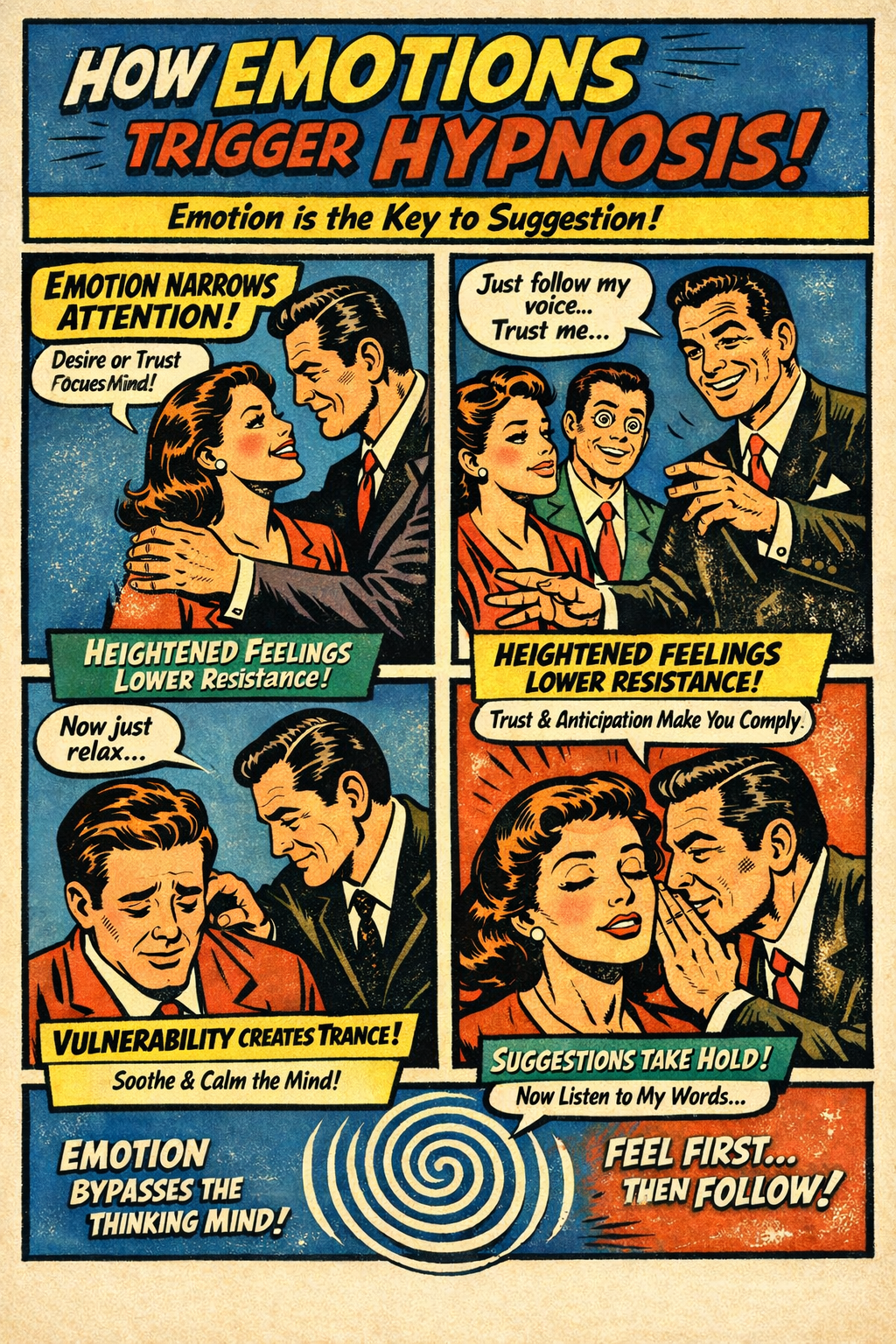
One of the most unique things about Forrest Gump is its structure. It’s not one, continuous narrative. Instead, it’s a series of short vignettes, set at different times in the life of Gump.
Each Vignette starts a story, and then ends with a swelling emotional scene. It’s timed so that as each new segment begins, the audience is in a strong emotional state created by the last one.
We feel Forrest’s shame as he’s mocked for being dumb. Fear in the jungles of Vietnam. Unbearable grief at the death of his mother. With the audience constantly primed, Forrest Gump then uses that to deliver something insidious: a morality play where obedience is rewarded and independent thought is punished.
All of that is then wrapped in nostalgia and empathy so thick you’re not supposed to notice.
From the start, Forrest Gump is a rule follower, no matter how bad the rules are around him. The movie starts with Forrest relaying things his mother told him and explaining how he followed her instructions.
The entire movie becomes a compliance exercise for Forrest Gump, a man who never questions anything, and a script that makes that work for the audience by portraying him as a person of limited intelligence.
Of course, Forrest just complies; he’s not smart enough to do anything else. But why Forrest complies isn’t as important from a persuasion perspective as the fact that he does comply, and the movie gets viewers to cheer for his compliance.
Forrest succeeds because he does exactly what he’s told. Not metaphorically. Literally.
Run, Forrest. He runs.
Join the army. He joins.
Play ping-pong. He plays.
Invest in shrimp. He invests.
Forrest never questions instructions from anyone. He never resists authority. He never evaluates outcomes. He doesn’t even really choose. He complies, and the universe showers him with rewards. Wealth. Fame. Love. Respect. A charmed life delivered one order at a time.
The film frames this as innocence. But structurally, it’s perfect obedience.
Obedience to his mother and Jenny. Obedience to the state that sends him to die in the jungle and then to play ping pong. Obedience is Forrest Gump’s entire life. He has no agency, and it’s celebrated.
One of the only moments where Forrest shows any agency is in a failed attempt to rescue Jenny, who he sees making out with a boy in a car and mistakenly thinks she’s being harmed. She yells at him, tells him he’s wrong.
So it’s right back to doing what he’s told. In that moment, after he apologizes and returns to compliance, Jenny rewards him by taking off her top.
When Forrest’s mother dies, and he runs out of people to obey, Forrest spends his time mowing lawns. Back and forth, back and forth, locked in a holding pattern while he waits for his next command.
When Jenny leaves him, that pattern repeats. Forrest starts running. Back and forth, back and forth, awaiting his next instructions. Like a feather being blown about by the wind.
Forrest Gump’s character is a textbook example of a persuasion technique call Moral Laundering. In Moral Laundering, an unpopular or contested idea is made more acceptable by attaching it to a trusted, heroic, or morally admired figure, allowing the figure’s perceived virtue to transfer onto the message.
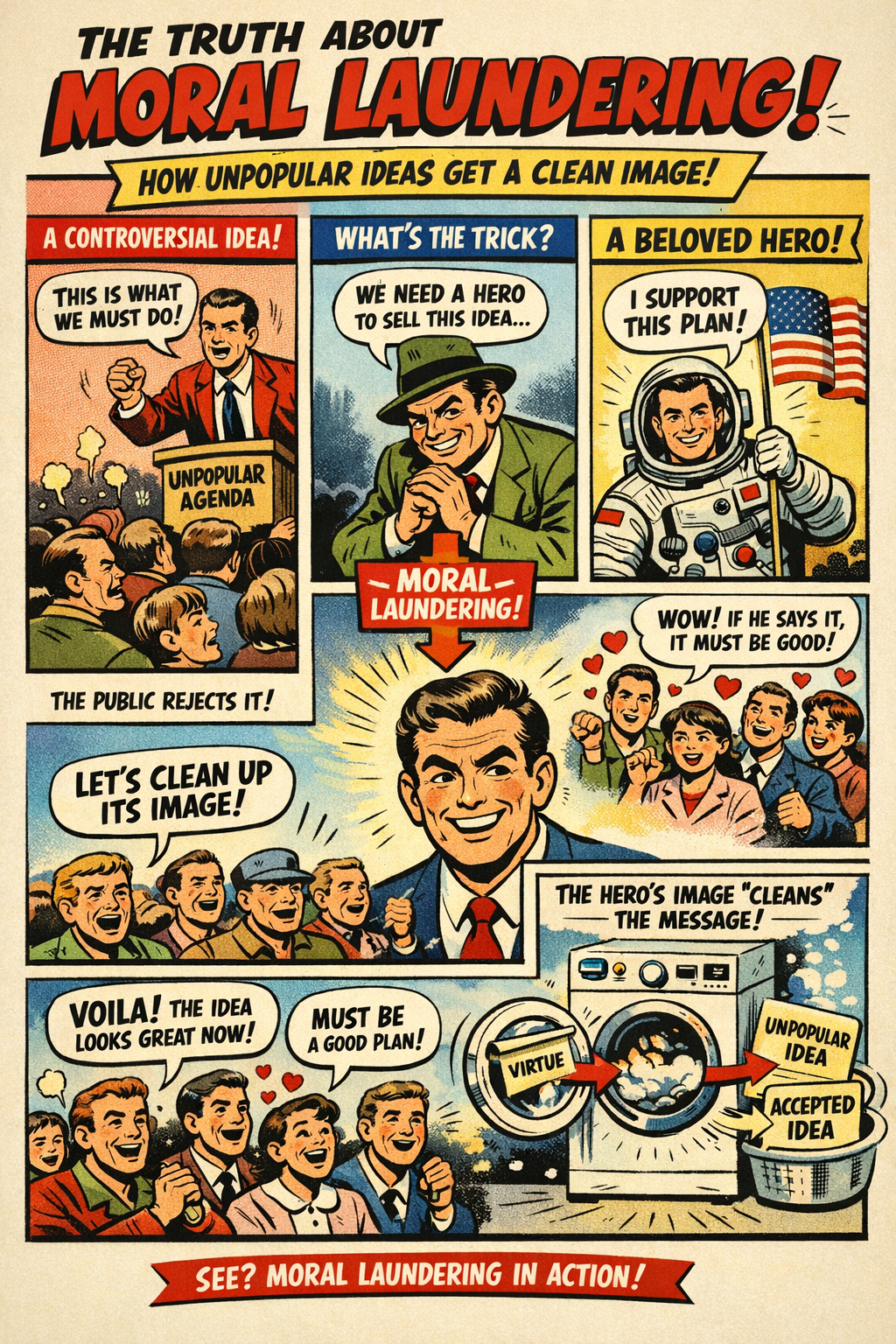
Moral laundering alone wouldn’t be enough to screenwash an audience into viewing total compliance as optimal. So the film provides a contrast to our obedient hero, using our old friend, Poisoning the Well.
In Poisoning the Well, you have a villain say something good, to make people think that the good thing is as villainous as the person saying it.
Both Moral Laundering and Poisoning the Well take advantage of moral asymmetry.
Moral asymmetry is the tendency of humans to judge the same behavior as morally acceptable or unacceptable depending on who commits it, rather than on the behavior itself.
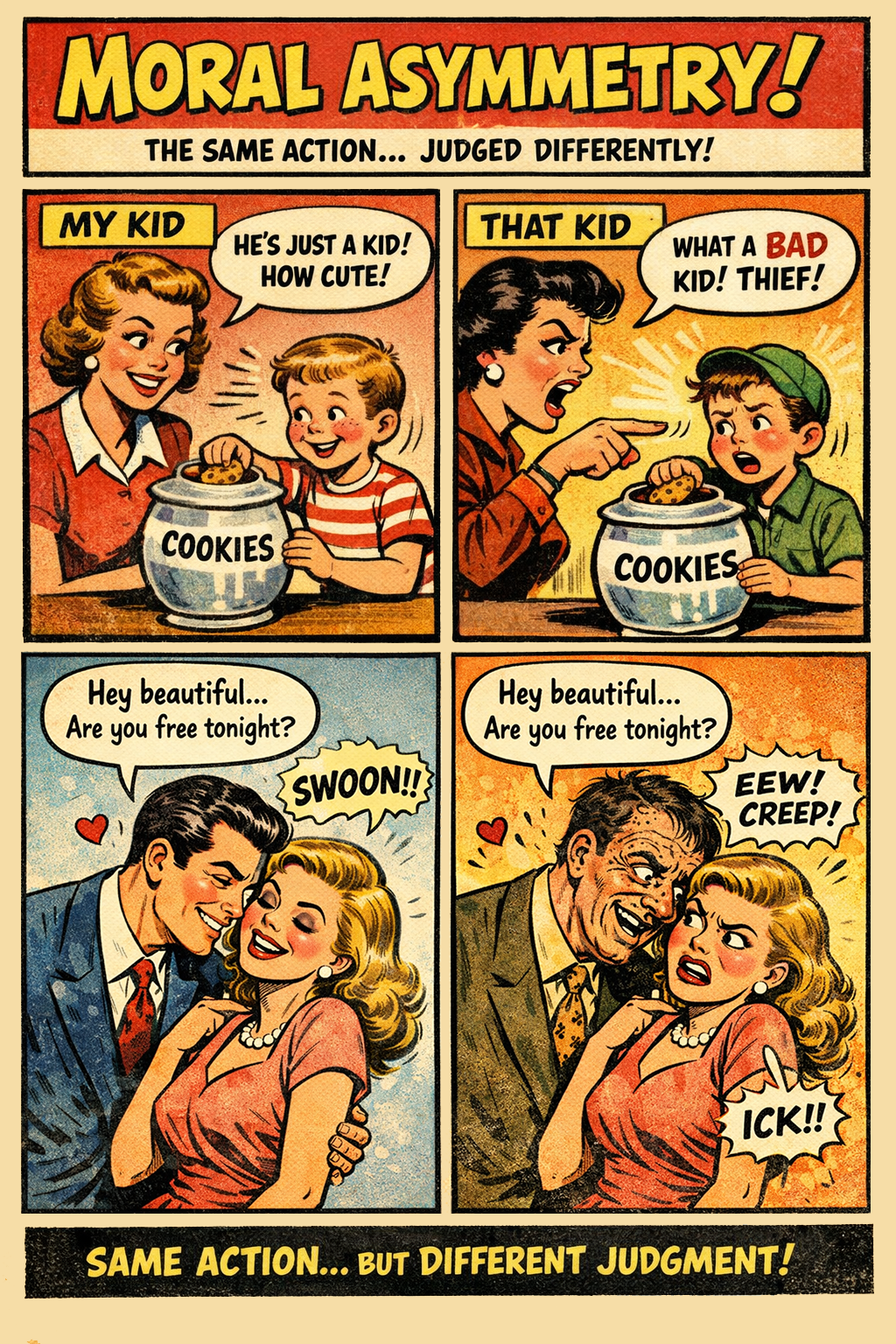
Forrest Gump is used to launder the idea that total obedience is an optimal behavior pattern, while another character poisons the well against thinking for yourself. Who’s the ultimate free thinker in Forrest Gump? Jenny.
From the moment we meet Jenny, she refuses to obey and follow the crowd. Forrest is getting picked on by the kids around him. Jenny has none of it; she defies the bullies’ authority and befriends him.
Throughout the movie, Jenny questions. Jenny rebels. Jenny does the unexpected. When she faces abuse from an authority figure, she gets away from it. She rejects traditional paths. She challenges authority. She experiments with politics, sex, and culture.
For that, the movie destroys her. It destroys her narratively by making her life a disaster, but it also destroys her in the eyes of the audience by making her a villain. It does that by having her express her independence through actions and ideas that most of the audience will find intolerable, and then turning her relationship with Forrest into one where she takes advantage of him.
The movie makes Jenny a villain on purpose, not accidentally, as some commentators seem to assume. Every time Jenny exercises agency, the film punishes her with escalating consequences: abuse, addiction, illness, and isolation. Her curiosity is framed as recklessness. Her defiance is reframed as self-harm. Her independence becomes pathology.
This is not subtle storytelling. It’s conditioning.
The movie pretends Jenny’s suffering is the result of “bad choices,” but it carefully rigs the game so every choice outside obedience leads to pain. There is no version of Jenny’s life where thinking for herself works out. The audience is trained, scene by scene, to associate her autonomy with disaster.
Worst of all, Jenny is redeemed only when she stops rebelling. She returns home. She settles down. She becomes quiet. Sick. Dependent. Her independence is stripped away, and only then is she allowed happiness. Only briefly, before she dies.
The message is unmistakable: a person who thinks for themselves must be broken before they can be accepted.
Forrest, meanwhile, never changes. He doesn’t grow. He doesn’t learn. He is rewarded precisely because he remains unchanged and never exercises any agency. He never thinks for himself. He always obeys.
This isn’t an accident. It’s a narrative machine built to make submission feel virtuous and independence feel dangerous.
In the movie’s final moments, Forrest tells the audience that there are only two possibilities to life: that everything is destiny or everything is random. Either possibility has the same commonality: you have no agency, you have no say in anything that happens to you. By the time the feather floats away, the audience has been trained to believe those two realities are the only possibilities, and that the best way through life is to follow orders, trust the system, and never ask why.
Life is a box of chocolates, and Forrest Gump teaches you to sit back and let life put whatever it wants in your mouth. So you cheer for the person who never questions. You mourn the person who does. You walk away thinking that’s just how the world works and there’s nothing anyone can do about it.

I was 12 when I watched my mother stab my 9-year-old sister with a fork at the dinner table. Supper was always a battle of wills between the two of them. My mom would rage and scream, and my sister would sit at the table refusing to eat, in a protest that sometimes lasted hours.
That night, my sister’s resistance reached a new level. She picked up her bowl of peas and dumped them on the floor. They rolled across our tiny kitchen’s cheap linoleum, and my father sighed a deeply tired sound. My sister smiled and placed her hands flat on the pitted tabletop in front of her.
Mom said nothing. A minute passed. Then another. Eventually, the rest of us stopped waiting for her reaction and resumed eating. It was liver and onions, a dish chosen for its low cost and not its taste. I drowned it in off-brand ketchup to hide the meat’s grimy texture.
I’d just swallowed a ketchup-covered lump when Mom shrieked. She pulled back her arm and slammed the tines of her fork deep into my sister’s pale, fragile hand.
I don’t remember the blood, only cleaning it up later. But I do remember the look of betrayal in my sister’s eyes as she clutched at her hand and started to wail. I remember my Dad, still in his greasy mechanic’s coverall, sitting at the table and doing nothing while I stood up and shouted, “Mom, what are you doing!” I remember my mother snarling as she stomped off to her room and slammed the door behind her.
Things got worse after that. A year later, my Dad would be gone, kicked out after she cheated on him, and I’d be stuck home with a monster I once thought of as my mother.
I’d sit up with my mother late into the night, fighting fatigue as I tried to keep her from waking my younger siblings with her hysterics. She responded by howling and threatened to commit suicide, while I desperately tried to comfort her and preach calm, afraid she might really do it this time.
In the morning, she’d emerge from her room long enough to scream me out of bed, and I’d trudge out the door to school as she serenaded me with a detailed accounting of how much she wished I’d never been born.
I still remember the first time she told me she hated me. I don’t remember any of the others.
In the evenings, I returned to find her locked back in the upstairs bedroom, leaving me to cook rudimentary meals for my little brother and sister. I’d beg her to come out long enough to buy supplies we needed at the store, but my only answer was the sound of whatever soap opera she had playing on the television.
Once part of the school’s talented and gifted program, my grades plummeted and I couldn’t keep up. My teachers didn’t seem to care or notice. They kicked me out of the advanced classes I’d been in since elementary school and sent me to remedial math, where everyone acted as if that’s where I’d always belonged.
I called family I thought I was close to and begged for help. “Mom’s going to kill herself,” I said. They told me they had their own problems. I told ministers at the church I grew up in, people I’d always believed I could trust. “We’re running out of stuff because Mom won’t come out of her room,” I told them. They nodded their heads and suggested some Bible passages. No one reported her to CPS or brought us any food.
My mother’s evil might sound like something that should be condemned, but in 2026 HBO produced a streaming series aimed at convincing people that she, and the people who refused to help me, were right.
The streaming series is called Lanterns, and like the Superman movie that preceded it in 2025, James Gunn produced it. It’s about a superhero named Green Lantern, who, if you’re not familiar, is a man with a ring of power that lets him create anything he can imagine.
Lanterns is the story of an aging Green Lantern named Hal Jordan, played perfectly by Kyle Chandler. He’s in the process of training an apprentice named John Stewart. It uses the two of them to construct a superhero origin story around the idea that parents can, and sometimes should, terrorize their children for their own good.
For you see, John Stewart was raised from birth to become Green Lantern by his parents. While still a baby, his mother learns John’s father would have been chosen as the Green Lantern instead of Hal, if only John’s father hadn’t been afraid.
John’s mother decides to “condition” (she actually uses the word “condition”) her son to be fearless. Her way of doing that is by enlisting his father in subjecting their baby boy to extreme levels of child abuse.
It works. John Stewart grows up and gets selected by the Guardians to become the next Green Lantern.
This is Reward Framing.
Reward Framing is a persuasive narrative technique in which an action is followed by a desirable outcome, encouraging the audience to view the action as effective, justified, or worthwhile, even when the action is harmful or morally condemned.
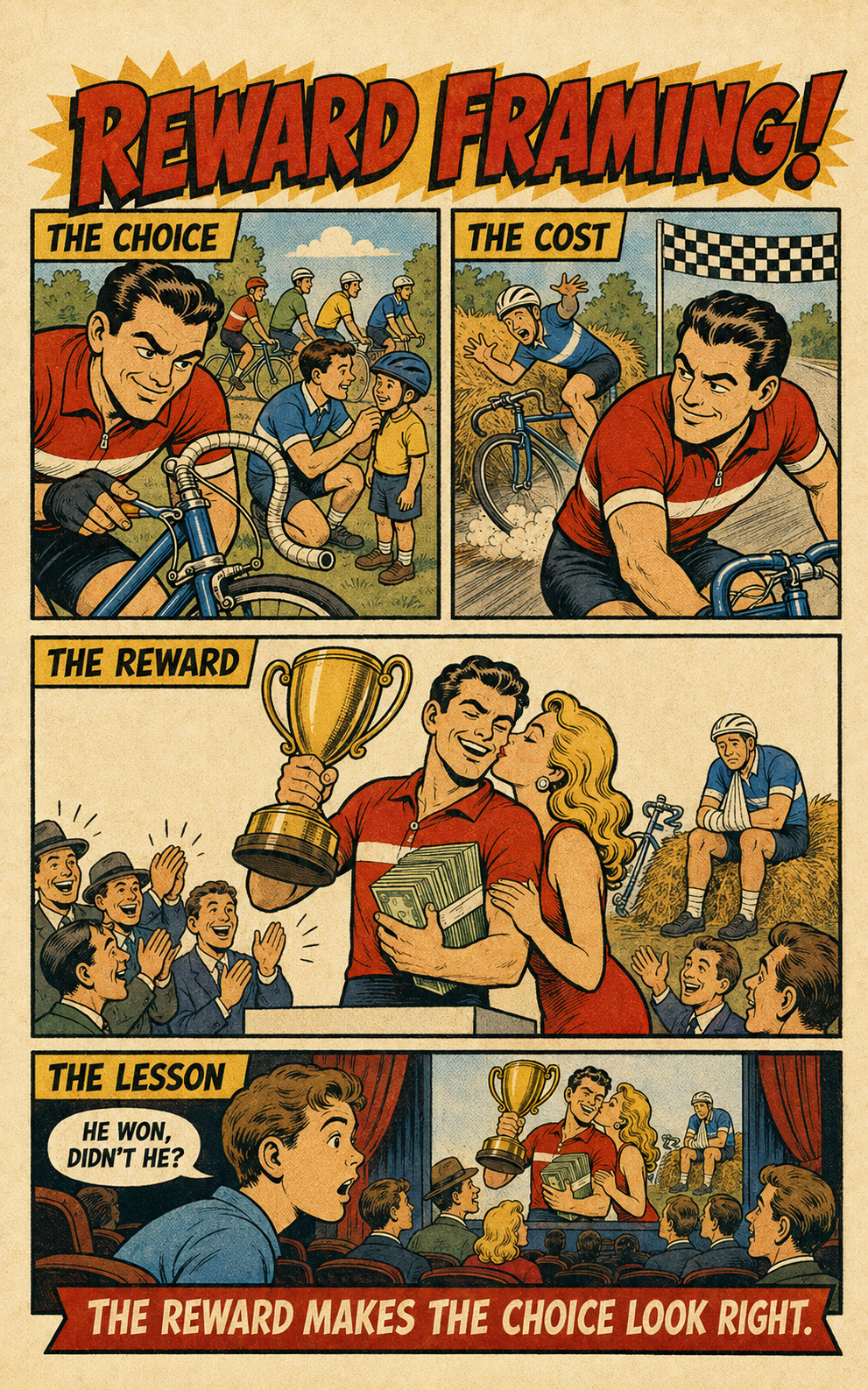
Before we go deeper into what they do to him, I need to make sure everyone reading understands what child abuse is. Often when child abuse is mentioned, people think that means physical assaults, like the one suffered by my sister, or worse. However, as demonstrated by my own story, child abuse does not begin and end with physically harming a child. There are other forms of child abuse, some even more harmful than physical aggression. Those include things like deliberately terrorizing them, emotionally attacking them, neglecting their safety, depriving them of normal development, and subjecting them to extreme danger. John’s parents do all of this systematically, not because they lose control, but because they believe abusing their child will make him stronger.
The worst and most carefully depicted of their many abuses involves John’s parents shooting at him. At an early age, both his mother and his father begin shooting apples off his head, while forcing their son to tell them he isn’t afraid. The show frames these attacks as bonding moments. When the shooting’s over, and John’s not dead, he gives his parents a hug. Then they take him out for a burger.
Shooting at their son is only part of the sick conditioning plan. John’s parents abandon him alone in dangerous neighborhoods and force him to find his way home alone. They deny him ordinary childhood pleasures because comfort might make him weak. Eventually, they force John himself to point a gun at his father and shoot an apple off his head.
This is not one terrible lapse in judgment. It is a system of abuse, maintained throughout his childhood and directed toward a single objective: eliminating fear.
Lanterns is not a television show merely depicting abusive parents. The show’s third episode devotes its entire runtime to constructing and validating a specific chain of cause and effect around this concept. John’s parents decide that fear will prevent him from becoming Green Lantern. They deliberately abuse him to eliminate that fear. John grows into the fearless man they intended to create. That fearlessness qualifies him for the power they wanted him to receive.
John’s selection vindicates the theory that child abuse will make someone fearless. Adult John then supplies moral validation: he still loves them, seeks their advice, and says that he owes them. Their methods are dangerous, but they achieve their stated objective. Their victim suffers, but the series has not shown him regarding that suffering as an injustice. Their actions are abusive, but the result is a superhero.
That is the difference between depicting abuse and rewarding it. Lanterns does not merely show us what John’s parents did. It constructs his heroism as the payoff for what they did.
This is Narrative Normalization.
Narrative normalization is a persuasive storytelling technique in which repeated, sympathetic, or consequence-free portrayals of a harmful behavior make it seem ordinary, understandable, or acceptable to the audience.
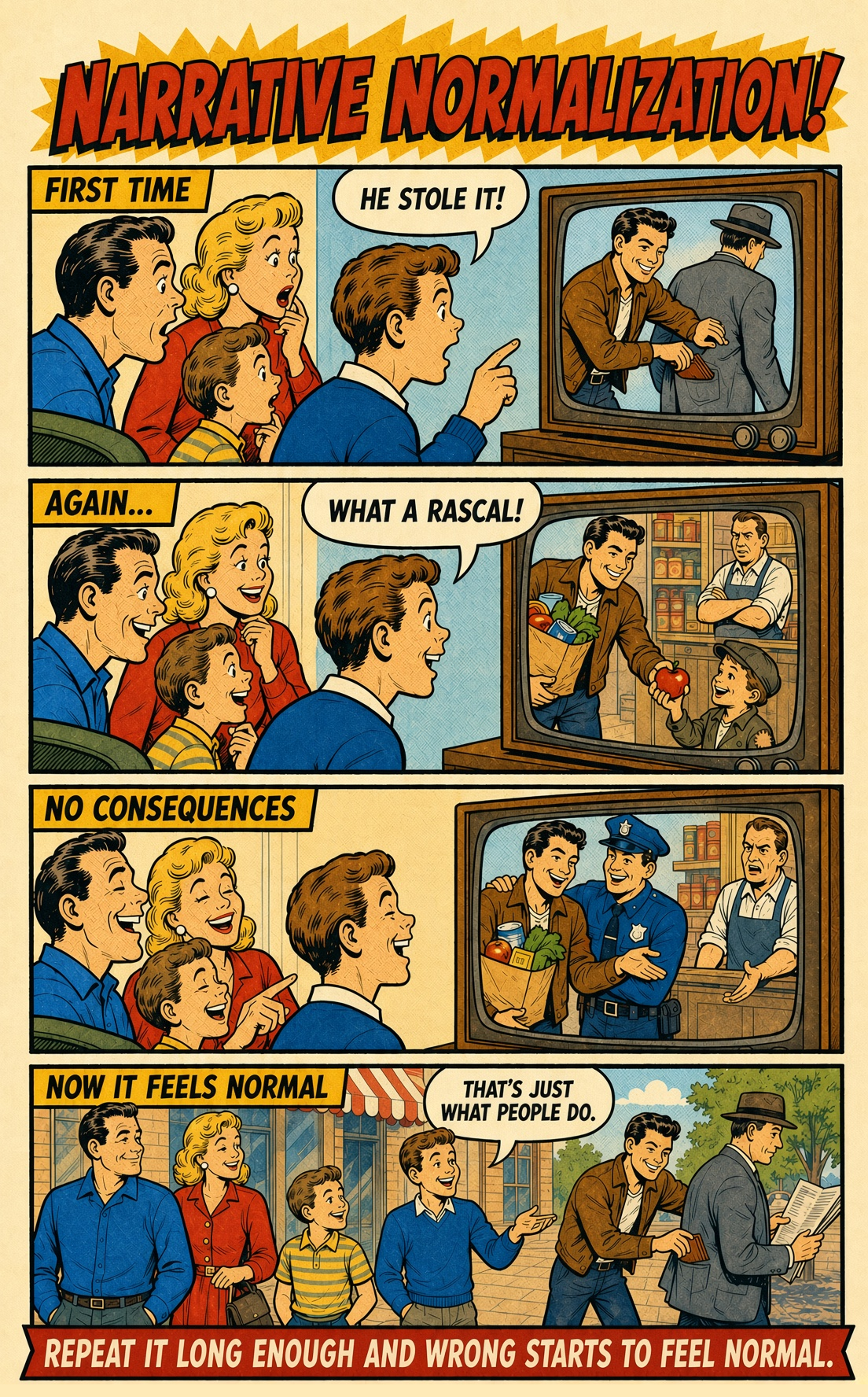
These kinds of portrayals obviously won’t cause people to start abusing their kids to give them superpowers, because everyone knows there’s no such thing as superpowers. What it does do is normalize abusing children as a method of making them stronger.
In one of the stranger cultural coincidences in recent memory, Lanterns arrived on television at exactly the same moment America was grappling with the case of Lindsay Clancy, a mother who killed her children and claimed that a voice told her killing them was the only way to keep them safe.
The connection between this real-life event and the fictional events of Lanterns is the moral lie at the center of both stories: that hurting a child becomes an act of love when the person doing the hurting claims it is for the child’s own good.
That is exactly how Lanterns rationalizes John Stewart’s abuse. His parents terrorize him, endanger him, and deny him a childhood, but because they say it’s necessary for his future, the show treats their cruelty as sacrifice. Then it rewards them by turning their victim into precisely the superhero they intended to create.
The message is that abuse can be love if it gets results. They set out to abuse fear out of their son; he became fearless; and that fearlessness made him Green Lantern.
My mother abused me for years, and it resulted in this book. By Lanterns' logic, that somehow makes what she did acceptable.
For my part, I’d rather have a good childhood than this book.
For More Samples or Inquiries: josh@walkbig.com